
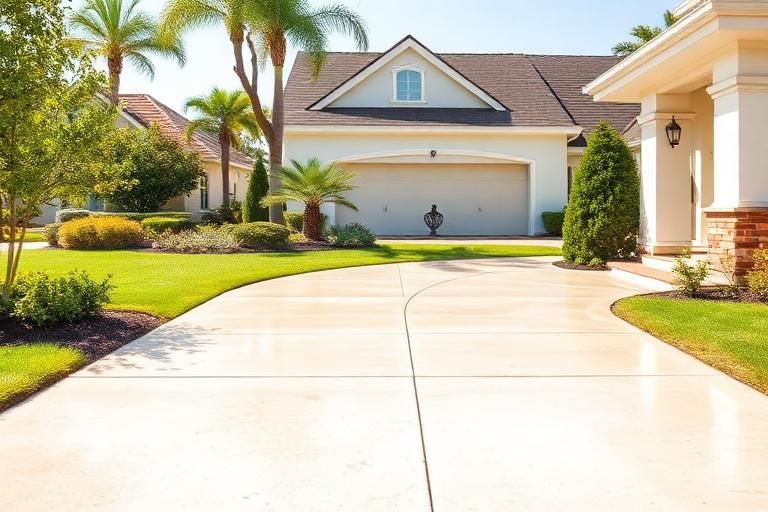
By April, a lot of Twin Cities driveways look like they lost an argument with the winter. There is a gray crust along the edges, white tide lines where the salt brine dried, black tire marks at the garage door, and a patchy, pitted look where the surface has been through repeated freeze and thaw. Walkways and steps have their own version of it, with slick algae in the shade and rust rings under the old planters.
Pressure washing is the right tool for much of this, because concrete, brick pavers and stone can handle real pressure when it is used with skill. The key words are with skill. Used badly, the same machine can etch concrete, blast out paver sand and leave permanent stripes. This page covers what the work involves, how different surfaces are treated, and what to ask before anyone starts. When you are ready, get a free quote by calling or texting (651) 858-2232 or using the contact page.
Concrete driveways and walkways
Plain broom-finish concrete is the easiest surface to clean and the most forgiving. A good clean usually uses a rotating surface cleaner, which is a round housing with spinning jets that sweeps the slab in even passes. It does the work faster than a hand wand and avoids the zebra stripes that come from sweeping a single jet back and forth. A wand is still the right tool for edges, steps, walls and tight corners.
What a clean can remove is dirt, algae, tire marks, mud, and a lot of the dull gray film from winter. What it cannot do is repair the concrete. Pitting, flaking and hairline cracks will be more visible once the surface is clean, and that is normal. Honest providers show you those areas at the quote so the first look at the finished slab is not a surprise.
Winter salt, brine and spalling
Road salt and brine are the biggest single factor in how Minnesota concrete ages. Salt itself does not eat concrete directly. The problem is that salt water keeps melting and refreezing in the pores, and the repeated expansion breaks off the thin top layer. That flaking is called spalling, and it shows up as rough, peeling or pitted patches, most often on newer slabs and on those that were not sealed.
A pressure wash removes the salt residue and the white film so you can see what is really there, and removing built-up salt in spring makes sense because it keeps drawing moisture. But cleaning cannot reverse spalling. If the surface has started to flake, a mild pressure setting and a careful approach matter, because high pressure can make flaking worse by stripping what is left of the top layer. Ask whether the plan changes for damaged concrete.
Efflorescence, oil and rust
Three stains look similar from the street and need different handling.
Efflorescence is a white, powdery deposit that appears when water moves through concrete or masonry and leaves salts on the surface. It is not dirt. It tends to return when the concrete gets wet again, and the real fix is controlling the moisture. Cleaning can reduce it, and it may come back.
Oil and grease soak into the pores. Fresh spills are far easier to lift than old ones, and heavy staining on a garage apron may only lighten after a degreasing treatment. Old, deep oil may remain as a shadow, and a provider who promises a perfect result is overselling.
Rust from metal furniture, old fertilizer, well water and car parts leaves orange stains. A rust-specific treatment can work on concrete, but it is a different step from washing, and some stains are very stubborn on light or porous surfaces.
A plain pressure wash on its own will not lift these deposits, which is why the quote should name them.
Pavers, joint sand and sealing questions
Brick and concrete pavers are more delicate than slab concrete in one specific way. They are held in place by sand in the joints, and a high-pressure jet can blow that sand out, loosen the pavers and leave low spots. Cleaning pavers properly means controlling pressure and distance, and then refilling the joints afterward, usually with a polymeric or compatible joint sand that is brushed in and set. Sand also helps keep weeds and ants out.
Sealing is the next question that comes up. A sealer can deepen color, make the surface easier to clean, and slow stains and some moisture, and some homeowners like it. It also changes the look and feel, may need to be redone over time, and must go on over a clean, fully dry surface. Whether to seal depends on the product and the paver. Ask for details about what is used, how it behaves in freeze and thaw, and whether it leaves the surface slippery. Sealing can be discussed during the quote, and a clean must be done first and given time to dry.
Patios, steps and stone
Patios combine several materials in one space, and a good plan treats each one on its own terms. A poured concrete patio takes a surface cleaner well. Flagstone and natural stone are softer and uneven, and they need a gentler touch and a closer eye on the mortar between stones. Stamped concrete has a surface pattern, and sometimes a color treatment or sealer, that can be dulled by too much pressure.
Steps and stoops matter for safety as well as looks. Algae on a shaded north-facing step is slippery, and cleaning it is not just cosmetic. Retaining walls, planter blocks and landscape edging get the same dirt as everything else, and block walls respond well to a low-pressure wash.
Wood decks and fences
Wood is where pressure washing is most often misused. Pressure that is fine on concrete can tear into soft wood, raise the grain and leave a fuzzy, scarred surface, especially on cedar and older pine. Decks and fences are usually better served by lower pressure and a cleaning solution, with the wood rinsed gently. Composite decking also needs care, since its surface can be scratched or can streak if it is cleaned the wrong way.
Whether to stain or seal after cleaning is a separate decision. If a deck has an old stain or finish, cleaning will remove loose material, and the wood must dry fully before you apply anything new. That drying time depends on the weather and the lumber, and your stain maker will have its own instructions, which is worth reading before you plan the paint or stain.
Why the equipment and technique matter
Not all pressure washing is equal, and most of the damage comes from technique rather than from the machine. A few things separate careful work from careless work:
- Surface cleaners produce an even finish on flat concrete and avoid streaks.
- Nozzle choice and distance control how much force reaches the surface.
- Working with the grain and flow keeps water moving away from doors, garage openings and foundation walls.
- Pre-treating stains and growth, rather than blasting them, saves wear on the surface.
- Rinsing runoff so it does not wash across a lawn, flower bed or neighbor's yard.
If you want to compare quotes, ask each provider how they decide pressure, what they do for pavers and decks, and how they handle drainage. We will look at your surfaces and talk through the method when you ask for a quote, and the exact plan is confirmed there.
Where the water goes
A driveway wash produces runoff, and that matters for your yard and for the street. Water should be directed away from the house and garage, toward lawn or a gentle slope rather than toward a foundation or window well. Grease, rust treatments and cleaning solutions should be used with care around storm drains and landscaping. Rules about runoff vary by city and sometimes by watershed district, so if you are in a neighborhood with strict stormwater rules or an HOA, check with the source and tell us what applies.
Along the river and the lakes, such as around Hastings, Inver Grove Heights and parts of Saint Paul, runoff control is worth a conversation, because storm drains can lead to the water. That is a good reason to talk through the plan before the machine starts.
Timing around Minnesota seasons
The best window for pressure washing runs from spring thaw through fall. Cleaning in freezing weather leaves ice on the surface, which is a slip hazard, and water that freezes in the pores of concrete can contribute to damage.
Spring is the big cleanup, once the sand and salt have stopped coming down and the ground is no longer frozen. Summer works well, and shaded surfaces can regrow algae quickly in humid weather. Early fall is a smart time to remove leaf stains and algae before the first salt, and before sealing, if you plan to seal. Many homeowners like to wash the driveway after the leaves are down but before the first hard freeze.
If you plan to stain a deck or seal pavers, schedule the cleaning with the finish in mind, since the surface needs time to dry, and the temperature affects how products cure.
What else to bundle with a driveway wash
A clean driveway beside a dirty house looks unfinished, so many people pair the work with house washing, which uses low pressure and a different method suited to siding. After a flat-work wash, a window cleaning catches the dust and spray on glass. A good plan also covers gutter cleaning, since overflowing gutters are a common cause of stains along the foundation and driveway edge.
Homes in Woodbury, Lakeville, Rosemount, Farmington and other service areas share the same pressures: long driveways, heavy salt, shaded entries. We can look at the whole property and suggest what makes sense.
How to get a free quote
We start with a free quote. Call or text (651) 858-2232, or send your details through the contact page. Tell us which surfaces you want cleaned, roughly how large they are, what the material is (broom-finish concrete, pavers, stamped concrete, wood or composite), and what you are seeing: oil, rust, salt, algae, tire marks. Photos make this much faster.
From there we will look at the surfaces, talk through the method, and confirm the exact plan with the quote. If a stain may not come out fully, we will say so up front.